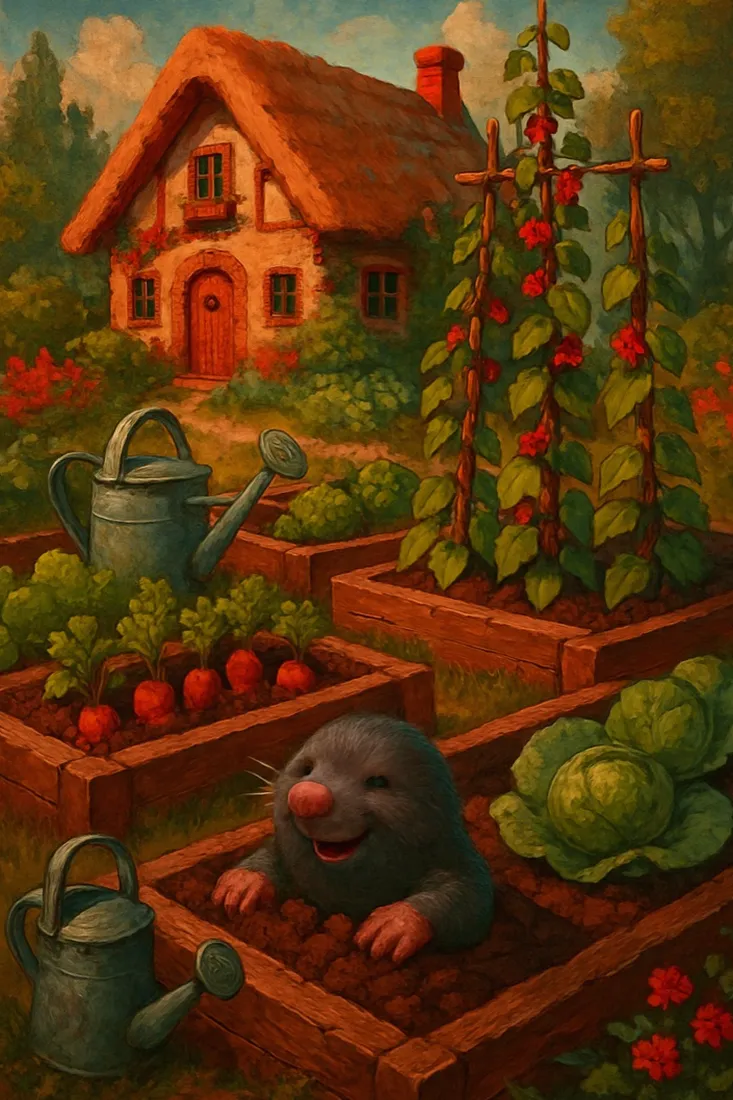
Molehill Empire 2 begins with a scrappy patch of ground and a simple promise: plant something, look after it and someone will want to buy it. Within minutes you have rows of vegetables in beds, weeds to clear and a customer at the gate wanting exactly the produce you are a few days away from harvesting. It is a cheerful start, and it sets the rhythm for everything that follows.
What lifts it above a plain growing game is the economy around the garden. Customers buy your harvest, which pays for more gardens; a market lets you trade with other players; guilds solve tasks together; and a cast of garden gnomes adds a layer of affectionate nonsense. It is the most British-feeling game on our shelf, somewhere between an allotment society and a village fête.
Beds, weeds and the art of harvesting on time
The heart of the game is the plot itself. You choose from a wide range of fruit and vegetable plants, sow them into beds, water them and wait for them to ripen. Weeds and pests turn up to complicate matters, and clearing them is part of the daily routine. The pleasure lies in timing: planting crops that will be ready when you next log in, so nothing sits idle.
As you progress you discover new plants and improve your yield, and the garden itself spreads into new areas. That expansion is slow enough to feel earned. We spent the first week happily replanting the same handful of vegetables, and the second week planning beds around the longer crops that suddenly made sense.
Customers at the gate and a market across the hedge
Customers queue to buy your harvested fruit, and their orders are the backbone of your income. Filling them well pays for more gardens and better plants, so a good session often starts by checking who is waiting and working backwards to what needs planting. It turns a gentle garden into a light planning puzzle.
The player market adds a second layer. Surplus carrots can be sold, missing produce can be bought, and the built-in messenger makes it easy to agree swaps with friends. Finding the best deals becomes a small hobby of its own. It never felt cut-throat to us; most trades were neighbours helping each other fill an awkward order.
Singing gnomes, snail races and monster fruit
Then there are the gnomes. Molehill Empire 2 lets you train them to become singing gnomes, which helps you grow monster fruit, or send them off as snail race jockeys. It is gloriously silly and entirely in keeping with the game’s gentle sense of humour, and it gives longer-term players something to tinker with beyond the beds.
Quests gradually open more features, including honey production, medicinal herb gardens and special buildings such as a monster plant farm. Each addition arrives at a sensible pace, so the game never dumps a dozen systems on you at once. Achievements and trophies mark the milestones, which suits players who like a tidy record of their progress.
How kind is the garden to free players?
The free path is decent. Crops grow on reasonable timers, customers keep coming and the market lets you cover shortfalls without spending anything. Premium currency speeds things up and buys extras, and it appears in the usual places, but we never felt our garden had stalled because we refused to pay.
Where the game asks more is attention. Harvesting on time and filling orders efficiently matter, and players who check in once every few days will grow more slowly than those who pop in daily. That suits an allotment temperament perfectly. The app on phones helps a lot, letting you harvest in a spare minute and save planning for the browser.
Planting week one in Molehill Empire 2
- Plant quick crops first and harvest them often; early income from customers matters more than chasing rare plants straight away.
- Clear weeds and pests as soon as they appear, because they block beds you could be using for the next order.
- Check the queue of customers before planting, and sow what they ask for rather than what looks prettiest in the beds.
- Visit the market once you have surplus, and sell spare produce to fund your next garden expansion.
- Look for a friendly guild by the end of the week, since shared tasks and messenger trades make progress much smoother.
What we love
- A satisfying planting rhythm that rewards good timing without punishing busy days
- A friendly player market that makes trading feel neighbourly
- Gnome antics and snail races that add genuine warmth and humour
- Steady unlocks such as honey and herb gardens that keep things fresh
What grates
- Growth slows noticeably if you only log in every few days
- Menus get busy once several garden areas are open
- Premium nudges appear whenever an order is nearly complete
Who Molehill Empire 2 will charm
Molehill Empire 2 is for gardeners who enjoy routine. If you like planting neat rows, timing harvests, swapping surplus with neighbours and laughing at a gnome on a snail, it will fit your week beautifully, especially if you can check in briefly on a phone.
Molehill Empire 2, harvested
Molehill Empire 2 is the most complete gardening game we have played in a browser. Its core loop of planting, harvesting and filling orders is satisfying on its own, and the market, guilds and gnomes give it real depth and personality. It asks for a little regular attention in return. Give it that, and it grows into a busy, cheerful garden that feels entirely your own.